How to Spot Bank and Payment Scams and Get Help Fast
Spot fake bank calls and texts, Zelle and payment app scams and fake checks, learn what Regulation E makes banks refund, and report fraud the right way.
This article was produced with AI assistance.
This article is for general information only. It is not financial or tax advice.

A bank or payment scam usually shows itself through pressure to move money, share a code, or pay in a way that is hard to reverse. Anyone who tells you to move your money to "protect" it is a scammer, and no real caller from your bank's fraud department will ask for a verification code [1]. When a call, text or check feels urgent, stop and contact your bank yourself using the number on your card or statement [1][2]. If money has already left your account, report it to your bank right away, because federal rules give stronger protection to people who report quickly. This guide covers the common bank and payment scams, what your bank must and need not refund, and where to report.
Why these scams matter
People told the FTC they lost about $16 billion to fraud in 2025, the highest amount on record and about 25% more than in 2024 [3]. Impostor scams were the most reported fraud type, making up nearly one in three fraud reports and $3.5 billion in reported losses [3]. Among business impostors, people reported the largest losses to scammers posing as banks [3].
Many of the costliest cases start the same way: a fake security alert, often claiming to come from a bank, that persuades the person to move money to keep it "safe" [3].
Impostor bank calls, texts and emails
How the scam usually runs
- A text arrives that looks like a bank fraud alert. It may ask whether you made a large purchase you do not recognize [2].
- You reply, and someone calls claiming to be from the bank's fraud department [2].
- The caller asks for information or action: your login, a one-time code, your card number, or a transfer to a "safe" account. With that, the scammer takes money from your account [2].
The FDIC, citing the FTC, says a typical person who fell for this kind of text lost $3,000 and also faced the risk of identity theft [2]. The same scam also arrives by email (phishing) and by phone (vishing) [2].
Warning signs
- A message creates urgency about your account [2].
- The caller asks for a verification code. Banks use these codes to confirm it is really you signing in, so sharing one lets a scammer pass as you [1].
- You are told to move money out of your bank, investment or retirement account [1].
- The caller seems to know details about you or your accounts. That does not prove the call is real.
- A link takes you to a site whose name or address is close to, but not exactly, your bank's [2].
What to do instead
- Hang up or do not reply. Call your bank using a number you already trust, such as the one on the back of your card, not one the caller gives you [2].
- Do not click links in the message [2].
- Check a bank website in the FDIC's BankFind tool before you enter anything. Watch for misspelled names and odd web addresses [2].
Peer-to-peer payment scams (Zelle, Venmo, Cash App, PayPal)
Peer-to-peer (P2P) payments move money from one person to another within seconds. Scammers like them because a payment is hard to pull back once sent [4].
Common versions
- The "fraud department" transfer. An impostor claims to have spotted fraud on your account and tells you to move money to keep it safe. Wherever you send it, the scammer controls it [1].
- The family emergency. Someone poses as a loved one in trouble and asks for money fast [4].
- The prize fee. You are told you won something but must pay a fee to collect it [4].
- The hijacked friend. A request comes from a contact whose account was hacked [4].
- The marketplace buyer or seller who asks you to pay or refund outside the platform's normal checkout.
How to protect yourself
The FTC suggests these steps [4]:
- Never pay to claim a prize or sweepstakes winnings.
- Never give your app login to someone who contacts you.
- Turn on multi-factor authentication or a PIN.
- Check the recipient's details before you hit send.
- If someone you know sends an unexpected money request, talk to them directly to confirm it.
Also know where the money sits. On apps such as Venmo and Cash App, money you receive goes into your app balance, not straight to your bank, until you transfer it [4].
Fake check scams
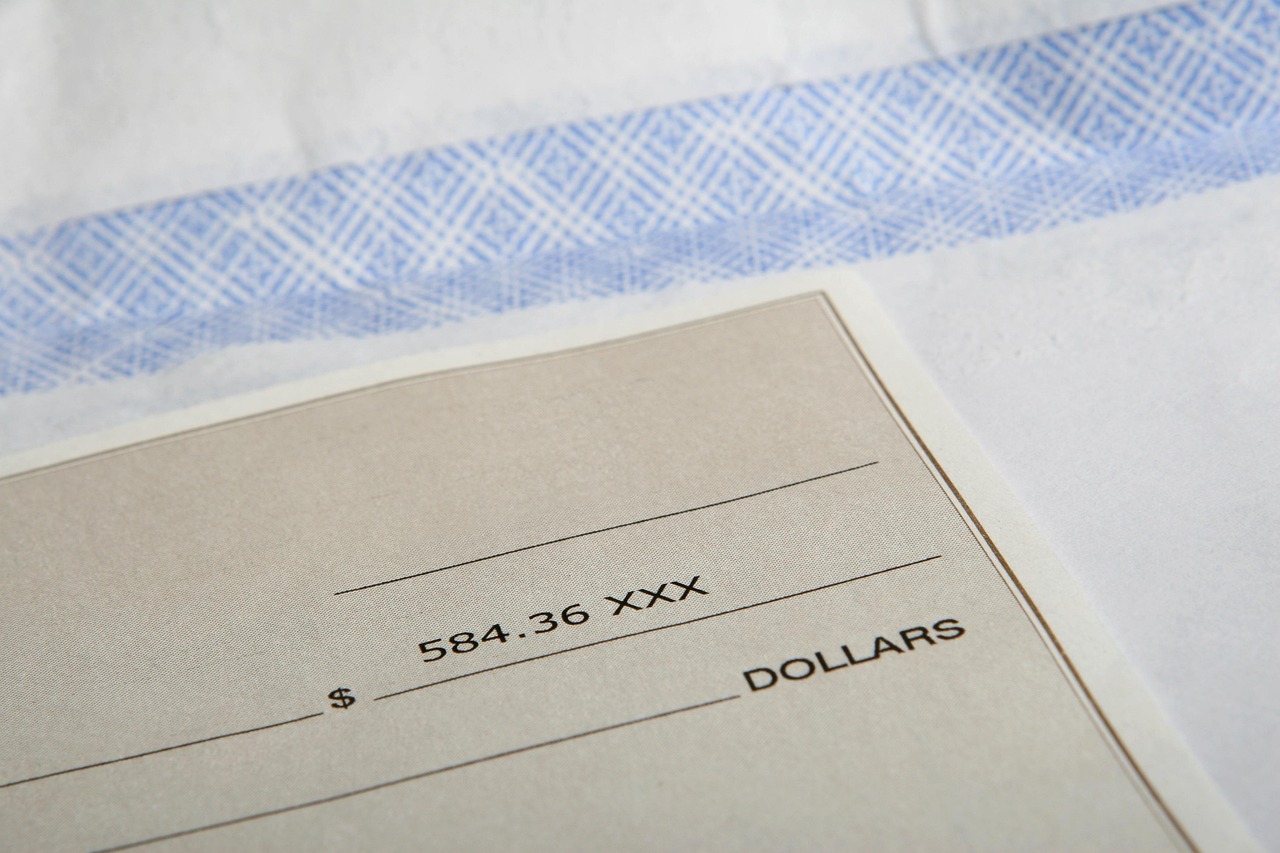
In a fake check scam, a stranger sends you a check, often for more than you are owed, and asks you to send part of it back or pass it on to someone else [5]. Common covers include mystery shopper jobs, personal assistant jobs, car wrap ads, prize winnings and online buyers who "overpay" [5].
Why the money looks real
Fake checks can look like real ones, even to bank tellers, and some are real checks drawn on stolen accounts [5]. Banks must make deposited funds available quickly, so money can show in your balance before the check has cleared [5]. For example, a check of $225 or less deposited in person, and a cashier's check deposited in person or at your bank's ATM, generally must be available by the next business day [6]. But discovering a fake can take weeks, and when the check bounces, you owe the bank the money [5].
Worked example. You sell a used bike for $300. The "buyer" mails a $2,300 cashier's check and asks you to send the extra $2,000 to a shipper by money order. Your bank makes the money available the next day. Three weeks later the check is returned as counterfeit. The bank takes back $2,300, and the $2,000 you sent is gone.
Rules of thumb
- Do not accept a check for more than the agreed price [5].
- If someone asks you to pass on part of a check as gift cards, money orders, crypto or a wire, say no [5].
- Treat money from a check as uncertain unless the writer is someone you know and trust [5].
What your bank must refund, and what it need not
The key federal rule is Regulation E, which governs electronic fund transfers (EFTs) under the Electronic Fund Transfer Act. A P2P payment sent from your bank account counts as an EFT [7].
Unauthorized transfers are covered
An unauthorized transfer is one started by someone other than you, without your permission, that you did not benefit from [7]. The CFPB has said this includes cases where a scammer tricks you into giving up your login details, a texted code or your card number and then makes the transfer, such as a caller posing as your bank [7]. A P2P payment pushed out of your account by a fraudster who got your login counts as unauthorized too [7]. Your bank cannot hold you to a higher share of the loss because you were careless [7][8].
How much you may owe depends on speed
| When you report | Your maximum share of the loss |
|---|---|
| Within 2 business days of learning your card or access device was lost or stolen | $50, or the amount taken before you reported, if less [8] |
| After 2 business days | Up to $500 [8] |
| More than 60 days after the statement showing the transfer was sent | Possibly unlimited for transfers after that 60-day point [8] |
If no card or device was involved, as when someone uses stolen account numbers, the $50 and $500 tiers do not apply; you owe nothing if you report within 60 days of the statement [8].
How the bank must investigate
Once you report an error, the bank generally has 10 business days to investigate [9]. If it needs longer, it can take up to 45 days, but it must provisionally credit your account within those first 10 business days [9]. Some types of transfers allow up to 90 days [9]. The bank may ask you to confirm an oral report in writing within 10 business days [9].
What is usually not covered
- Payments you sent yourself because you were tricked. If you started the transfer, it does not fit the definition of unauthorized, because that definition requires a transfer started by someone else [7]. Your bank or app may still help, but federal law does not require a refund.
- Transfers by someone you gave your card or access to, until you tell the bank that person is no longer allowed. This does not apply if the access was taken from you through fraud [7].
- Fake checks you deposited. When the check bounces, you owe the bank the money you were credited [5].
- Wire transfers, gift cards and crypto. Getting money back is hard. A wire reversal is unlikely, though you should still ask [5], and crypto payments lack the legal protections that credit and debit cards have [10].
Even when a refund is not required, ask. The FTC's advice for Zelle and bank transfers is to report to your bank at once and ask it to reverse the payment [10].
How to report a scam
Act in this order, and do it fast:
- Your bank or credit union. Report the transfer and ask for a reversal and refund [10]. Use the number on your card or log in through the bank's app [10].
- The payment app, if you used one. Report through the app's help or support screen [4].
- The FTC, at ReportFraud.ftc.gov. The FTC uses reports to build cases and spot trends [10].
- The FBI's Internet Crime Complaint Center (IC3) at ic3.gov, the FBI-run hub for reporting cyber-enabled crime [11]. Note that IC3 will never contact you directly to ask for money or information, and it does not work with private firms to recover funds [11].
- For fake checks, also the U.S. Postal Inspection Service and your state attorney general [5].
- If you gave out your Social Security number, go to IdentityTheft.gov for a recovery plan [10].
- If you shared a password, change it, and turn on two-factor authentication [10].
Keep a record
Write down the date and time you reported, who you spoke with, and any case number. Save texts, call logs and screenshots. Follow up a phone report in writing, since your bank may require it [9].
Beware of "recovery" offers
After a loss, you may hear from someone who promises to recover your money for a fee. Treat that as a second scam. The IC3 warns that scammers pose as IC3 itself [11].
Frequently asked questions
Will my bank ever text me a code and then call to ask for it? No. The FTC says a caller who asks for your verification code, even one claiming to be from your bank's fraud department, is always a scammer [1]. Hang up and call the number on your card [2].
Does the 60-day window start when the fraud happened? No. For transfers shown on a statement, it runs from when the bank sent the statement that first shows the transfer [8][9].
Is a scam payment by credit card handled the same way? No; credit cards have their own federal protection against unauthorized use. The FTC says to report the charge to the card issuer right away and ask for a refund [10].
When to get professional help
If your bank denies a claim you believe is an unauthorized transfer, its written explanation must tell you that you can request the documents it relied on, and it must send copies on request [9]. You can also file a complaint with the CFPB. For large losses, or if someone opened accounts in your name, a consumer protection attorney or a local legal aid office can review your options.
Your next step
Today, save your bank's fraud number from the back of your card into your phone contacts, and turn on transaction alerts in your banking app so you see every transfer. Then share the rule with family members, especially older relatives: no real bank will ask you to move money to protect it.
Sources
- consumer.ftc.gov https://consumer.ftc.gov/consumer-alerts/2024/03/never-move-your-money-protect-it-thats-scam
- fdic.gov https://www.fdic.gov/consumer-resource-center/2025-06/bank-impersonation-scams-and-fake-banks
- ftc.gov https://www.ftc.gov/news-events/news/press-releases/2026/06/ftc-data-show-people-reported-losing-3-point-5-billion-imposter-scams-2025
- consumer.ftc.gov https://consumer.ftc.gov/articles/mobile-payment-apps-how-avoid-scam-when-you-use-one
- consumer.ftc.gov https://consumer.ftc.gov/articles/how-spot-avoid-and-report-fake-check-scams
- consumerfinance.gov https://www.consumerfinance.gov/ask-cfpb/how-do-i-switch-bank-accounts-en-1023/
- consumerfinance.gov https://www.consumerfinance.gov/compliance/compliance-resources/deposit-accounts-resources/electronic-fund-transfers/electronic-fund-transfers-faqs/
- consumerfinance.gov https://www.consumerfinance.gov/rules-policy/regulations/1005/6/
- consumerfinance.gov https://www.consumerfinance.gov/rules-policy/regulations/1005/11/
- consumer.ftc.gov https://consumer.ftc.gov/articles/what-do-if-you-were-scammed
- ic3.gov https://www.ic3.gov/