How to Build an Emergency Fund: Size, Place and Plan
How much to keep in an emergency fund, which insured accounts to hold it in, how to build it on a tight budget, and how to use and refill it.
This article was produced with AI assistance.
This article is for general information only. It is not financial or tax advice.
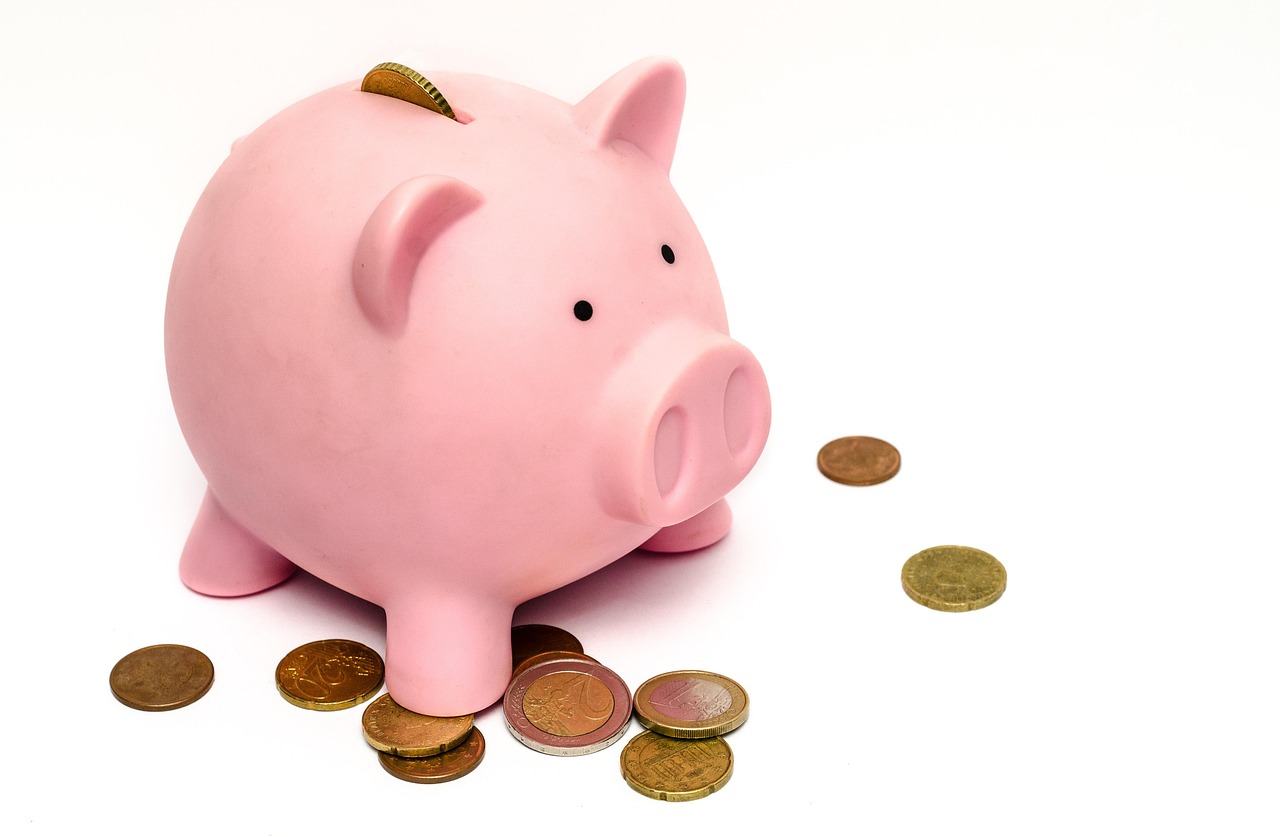
An emergency fund is money you keep aside only for costs you did not plan for, such as a broken-down car, a medical bill or a lost job. A common long-term target is three to six months of essential living costs [1][2]. You do not need that much to start: a first goal of $1,000, or about half of one month's spending, already covers many surprise bills [2][1]. Keep the money in a federally insured savings account that is separate from your everyday checking, add to it on a set schedule, and refill it after you use it.
Why an emergency fund matters
Surprise costs are common. In the Federal Reserve's survey of household finances in 2025, 59% of adults had at least one major unexpected expense in the prior 12 months. The most frequent were a large vehicle repair or replacement (30% of adults), a big house or appliance repair (22%) and major medical bills (21%) [3].
Many households are not ready for them. Only 63% of adults said they would cover a $400 surprise expense with cash or its equivalent, which the survey defines as cash, savings or a credit card paid in full at the next statement [3]. Among adults earning less than $50,000, about 4 in 10 said savings alone would not cover even a $100 expense [3].
Without savings, a small shock can turn into lasting debt. The Consumer Financial Protection Bureau (CFPB) notes that people without a cushion often lean on credit cards, loans or retirement savings, and that interest and fees can make a one-time bill much larger than it started [4].
Credit card rates show why. In August 2026, the average rate on credit card accounts that were charged interest was about 22% a year, according to Federal Reserve data [5]. At that rate, a $1,500 repair left unpaid on a card for 12 months would build up more than $300 in interest.

How much should you keep?
Two kinds of emergencies drive the number. Vanguard splits them into "spending shocks," such as a cracked windshield or a dental bill, and "income shocks," such as a layoff [1].
- For spending shocks: keep at least half of one month's living costs [1].
- For income shocks: build toward three to six months of living costs [1].
Fidelity's general guideline is similar: start with $1,000, then work toward three to six months of essential expenses [2]. It suggests saving more than that if people depend on your income, if you own an older home or a car that is not always reliable, if layoffs or uneven pay are common in your field, or if you are retired or live on a fixed income [2].
Count only essential costs
Base the target on what you must pay, not on everything you spend. Essentials include rent or mortgage, utilities, basic groceries, health care, insurance premiums, child care, transportation and minimum debt payments. Leave out items you could pause in a crisis, such as restaurant meals, trips and gym memberships [2].
Worked example
Maria takes home $3,800 a month. Her essential costs are:
| Essential cost | Monthly amount |
|---|---|
| Rent | $1,350 |
| Utilities and phone | $260 |
| Groceries | $500 |
| Car payment, insurance and gas | $560 |
| Health insurance and prescriptions | $180 |
| Minimum debt payments | $150 |
| Total | $3,000 |
Her savings goals step up in stages:
- Starter goal: $1,000.
- Spending-shock goal: half a month of essentials, or $1,500.
- Three months: $9,000.
- Six months: $18,000.
Maria has a steady job and no children, so she aims for three months first. If she had dependents or earned commission pay, six months would give her a wider margin.
Where to keep your emergency fund
The CFPB says an emergency fund should be safe, easy to reach and kept somewhere you will not be tempted to dip into for everyday spending [4]. For most people, that means a savings account or a money market deposit account at an insured bank or credit union.
Use an insured account
The Federal Deposit Insurance Corporation (FDIC) insures deposits at member banks up to $250,000 per depositor, per bank, for each ownership category, such as single accounts and joint accounts [6]. Covered products include checking, savings, money market deposit accounts and certificates of deposit (CDs). Stocks, bonds, mutual funds, annuities and crypto assets are not covered, even when you buy them through a bank [6].
Credit unions have similar protection. The National Credit Union Administration (NCUA) covers individual accounts at federally insured credit unions up to $250,000. Each member's share of joint accounts gets its own, separate $250,000 of coverage [7]. A few state-chartered credit unions use private insurers instead, and that coverage is not backed by the U.S. government, so look for the official NCUA sign [7].
Compare interest rates
Where you keep the fund also changes what it earns. In the FDIC's October 2026 rate report, the national average was 0.38% for savings accounts and 0.63% for money market accounts [8]. Some online savings accounts paid much more; Bankrate's October 2026 list showed yields as high as 4.35% [9]. On a $5,000 balance, the gap between 0.38% and 4% is about $180 of interest a year.
Read the terms before you move money. Some of the highest yields are short-term promotions, and some accounts pay the top rate only above a minimum balance [9].
Options compared
| Option | Fit for an emergency fund | What to watch |
|---|---|---|
| High-yield savings account | Good home for most of the fund | Promotional rates can end |
| Money market deposit account | Good home for most of the fund | Account rules and fees vary by bank |
| CDs | Only for money beyond the first few months | Penalties if you cash out early |
| I bonds | A long-term extra layer at most | Cannot be cashed for 12 months; you lose 3 months of interest if you cash out before 5 years [10] |
| Cash at home | A small amount for power outages | Can be lost, stolen or destroyed [4] |
| Stocks or mutual funds | Not suitable | Not FDIC insured, and values can fall [6] |
How to build it on a tight budget
The CFPB says that if you have little room to save, the easiest places to begin are managing your cash flow and saving part of a tax refund [4]. Cash flow means the timing of money coming in and going out. These steps work even on a small income.
- Open a separate account. A dedicated account keeps the fund apart from spending money [4].
- Pick a small, fixed amount. Even $10 or $25 a payday counts. A set amount makes the habit easier to keep [4].
- Automate it. Set up a recurring transfer from checking to savings timed for right after each payday [4]. Keep an eye on your checking balance so a transfer does not trigger an overdraft fee [4].
- Split your paycheck. If you get direct deposit, ask your employer whether part of each check can go straight to savings [4].
- Fix timing problems. If several bills land right before payday, ask your landlord, utility or card company about moving a due date [4].
- Save windfalls. A tax refund is often the largest single check a household gets all year [11]. You can have the IRS direct deposit a refund into as many as three accounts, through your tax software or Form 8888, so part of it goes straight to savings [11]. Each account must be in your name, your spouse's name or both [11].
- Track your progress. Check the balance often, and set the next goal once you reach one [4].
How long it takes
| Saved per month | Time to $1,000 | Time to $3,000 | Time to $9,000 |
|---|---|---|---|
| $50 | 20 months | 60 months | 180 months |
| $100 | 10 months | 30 months | 90 months |
| $250 | 4 months | 12 months | 36 months |
| $500 | 2 months | 6 months | 18 months |
These times leave out interest, so an account with a good yield gets you there a little sooner. To find more to save each month, our article on how to lower monthly bills covers phone, internet, insurance and utility costs.
When to use it, and when not to
The CFPB suggests setting your own rules for what counts as an emergency and applying them the same way each time [4]. Three questions help:
- Is it unexpected? A car registration you pay every year is not.
- Is it necessary? A broken furnace in January is. A sale on a new TV is not.
- Is it urgent? Will waiting cause harm or a bigger bill later?
If the answer to all three is yes, use the fund. The CFPB is clear that you should not hold back from spending it when you truly need it [4].
Predictable costs that do not arrive every month, such as holiday gifts, yearly insurance premiums and routine car upkeep, are better handled by separate savings goals called sinking funds. Our article on sinking funds explains how to size them.
Leave retirement accounts alone if you can
Money taken from an IRA or workplace plan before age 59½ is usually subject to income tax plus a 10% additional tax, unless an exception applies [12]. One exception, for distributions made after 2023, allows one withdrawal per calendar year for personal or family emergency expenses. It is capped at $1,000, or your vested balance above $1,000 if that is less [12]. That can help in a pinch, but a cash fund avoids the tax and keeps your retirement savings growing.
How to refill it after you use it
- Restart your transfers right away, even at a smaller amount, so the habit does not lapse [4].
- Raise the amount for a few months. Redirect money from a paused goal, or from a bill you cut.
- Send part of the next windfall to the fund, such as a refund, bonus or cash gift [4].
- Clear any card balance from the emergency quickly. Card rates around 21% to 22% [5] cost far more than a savings account earns [8].
- Review the target once a year, and after big changes such as a new baby, a move or a new job.
Common mistakes
- Waiting until you can save a lot. Even a small amount gives some protection [4].
- Keeping the fund in checking. It tends to get spent on everyday purchases.
- Investing it in the stock market. Losses can arrive at the same time as a layoff, and investments carry no FDIC coverage [6].
- Ignoring the insurance limit. Balances above $250,000 in one ownership category at one bank are not fully insured [6].
- Using it for planned costs. Then it is empty when a real emergency arrives.
- Never rebuilding it. A fund that is spent once and not refilled will not help next time.
When to get professional help
If debts or bills take every dollar and you cannot save anything, talk with a nonprofit credit counselor about a budget and a plan for your debts. If you are thinking about a retirement withdrawal to cover an emergency, a tax professional can tell you what it will cost before you take it.
Your next step
Add up your essential monthly costs and divide by two. That is your first target. Then set up an automatic transfer to a separate insured savings account for the day after your next payday.
Sources
- investor.vanguard.com https://investor.vanguard.com/investor-resources-education/emergency-fund
- fidelity.com https://www.fidelity.com/learning-center/smart-money/emergency-fund
- federalreserve.gov https://www.federalreserve.gov/publications/2026-economic-well-being-of-us-households-in-2025-executive-summary.htm
- consumerfinance.gov https://www.consumerfinance.gov/an-essential-guide-to-building-an-emergency-fund/
- federalreserve.gov https://www.federalreserve.gov/releases/g19/current/default.htm
- fdic.gov https://www.fdic.gov/resources/deposit-insurance/understanding-deposit-insurance
- ncua.gov https://ncua.gov/consumers/share-insurance-coverage
- fdic.gov https://www.fdic.gov/national-rates-and-rate-caps
- bankrate.com https://www.bankrate.com/banking/savings/best-high-yield-interests-savings-accounts/
- treasurydirect.gov https://www.treasurydirect.gov/savings-bonds/i-bonds/
- irs.gov https://www.irs.gov/refunds/get-your-refund-faster-tell-irs-to-direct-deposit-your-refund-to-one-two-or-three-accounts
- irs.gov https://www.irs.gov/retirement-plans/plan-participant-employee/retirement-topics-exceptions-to-tax-on-early-distributions