How to Lower Monthly Bills: Phone, Internet, Insurance, Utilities
A step-by-step way to audit your bills, negotiate or switch phone, internet and insurance plans, cut utility costs, and use Lifeline and LIHEAP help.
This article was produced with AI assistance.
This article is for general information only. It is not financial or tax advice.

You can lower most monthly bills in four ways: cancel what you do not use, ask your current provider for a lower rate, switch to a cheaper plan or company, and apply for help if your income qualifies. Start with a full list of your recurring charges, then work through the largest ones first. Car insurance, internet, phone and utilities often have room to cut, and federal programs such as Lifeline and the Low Income Home Energy Assistance Program (LIHEAP) can reduce costs for eligible households.
Step 1: Audit every recurring bill
You cannot cut what you have not found. Pull the last two or three months of bank and credit card statements, and list every charge that repeats. The Consumer Financial Protection Bureau (CFPB) suggests logging spending by category and reviewing it one week at a time if a full month feels like too much [1].
For each bill, write down:
- The company and what the charge is for
- The monthly cost, and the yearly cost (monthly times 12)
- The due date
- Whether you are under contract, and when a promotional rate ends
- Whether you still use it
The yearly figure changes how a bill looks. A $15 streaming service is $180 a year. Utilities are larger than many people expect: the average U.S. household spent $4,931 on utilities, fuels and public services in 2025, according to the Bureau of Labor Statistics [2]. That works out to about $411 a month.
For example, a quick audit might look like this:
| Bill | Monthly | Yearly | Action |
|---|---|---|---|
| Car insurance | $190 | $2,280 | Get three quotes before renewal |
| Internet | $85 | $1,020 | Promo ended; call to negotiate |
| Phone (two lines) | $140 | $1,680 | Compare lower-cost plans |
| Three streaming services | $45 | $540 | Keep one, cancel two |
| Gym membership | $40 | $480 | Not used since spring; cancel |
Sorting by yearly cost shows where one phone call matters most.
Note due dates too. The CFPB recommends a bill calendar, because a mismatch between when bills are due and when you get paid is a common reason people run short [1].
Step 2: Cancel or downgrade subscriptions
Subscriptions are the quickest win, because canceling usually takes a few minutes. Sort each one into keep, downgrade (for example, an ad-supported tier) or cancel.
The Federal Trade Commission (FTC) gives clear advice on how to cancel and how to avoid traps [3]:
- Follow the company's own cancellation steps, and keep a copy of the request plus notes on any calls [3].
- Check your statements afterward. If charges continue after you canceled, dispute them with your card company, which is called a chargeback, and follow up in writing [3].
- Know the law is on your side. The FTC says businesses must explain how to cancel before taking your card number, and must make canceling simple [3].
- Report problems to the FTC at ReportFraud.ftc.gov and to your state attorney general [3].
Avoid free trial and auto-renewal traps
A "free trial" usually needs a card number so the company can bill you if you do not cancel in time [3]. Before you sign up, find the trial length and the cancel steps. Uncheck any pre-checked boxes you did not agree to, and set a calendar reminder before the trial ends [3]. When a renewal notice arrives, confirm the price, since an automatic renewal can cost more than a promotional rate you paid before [3]. Be wary of renewal notices for subscriptions you do not have; they may be scams seeking your card details [3].
Step 3: Cut phone and internet costs
Compare plans with broadband labels
Internet providers must show a broadband label, which works like a food nutrition label, for every standalone home or mobile internet plan they sell [4]. Labels list the monthly price, introductory rates, data limits and speeds, and you should see them wherever plans are sold, online or in stores [4]. Existing customers can find their own plan's label in their online account, or ask the provider for it [4]. If a provider hides its label or lists fees that are wrong, you can complain to the Federal Communications Commission (FCC) [4].
Use the label to check three things:
- Is the price introductory? Find out what the bill becomes when the promotion ends.
- Do you need this speed? Check whether a slower, cheaper tier would cover how your household actually uses the internet.
- What fees are added? Equipment rental and other monthly fees raise the true price.
Negotiate, then be ready to switch
Call your provider's customer retention or loyalty line, not general support. A simple script works:
"I've been a customer for four years. My bill is now $85, and I can get similar service from another provider for $55. Can you lower my rate, or should I cancel?"
Have a real competing offer in hand, and be ready to follow through. If the provider will not move, switching is often the lasting fix. For mobile phones, compare prepaid and lower-cost plans that run on the major networks, and check whether you can keep your phone and number.
Apply for Lifeline if you qualify
Lifeline is a federal program that cuts the monthly cost of phone or internet service. It is run by the Universal Service Administrative Company (USAC) with FCC oversight [5]. The standard benefit is up to $9.25 a month, and households on qualifying Tribal lands can get up to $34.25 a month [5].
You can qualify in either of two ways:
- Program participation: you or someone in your household gets Medicaid, SNAP, Supplemental Security Income, Federal Public Housing Assistance, a Section 8 voucher, or a Veterans Pension or Survivors Benefit, among others [6].
- Income: household income at or below 135% of the 2026 federal poverty guidelines [6].
| Household size | 2026 Lifeline income limit (48 states and D.C.) |
|---|---|
| 1 person | $21,546 |
| 2 people | $29,214 |
| 3 people | $36,882 |
| 4 people | $44,550 |
Limits are higher in Alaska and Hawaii [6]. Once approved, you sign up with a participating phone or internet company. Residents of Oregon and Texas apply through their state's own website [5]. Your eligibility is checked again every year, and if you miss a recertification deadline you lose the benefit [5].
Note that the Affordable Connectivity Program, an older internet discount, ran out of funding, and April 2024 was its last fully funded month [4].

Step 4: Lower your insurance premiums
Insurance is worth repricing every year, because you can often pay less for the same coverage. AAA estimated that full-coverage car insurance on a new vehicle averaged $2,098 a year in 2026 for a driver under 65 with a clean record [7]. The Insurance Information Institute (Triple-I) lists several ways to bring that down [8]:
- Shop around at renewal. Prices differ by company, so get at least three quotes, and check that the insurer is financially stable [8].
- Raise your deductible if you have savings to cover it. A deductible is what you pay before coverage starts. Moving from $200 to $500 could cut collision and comprehensive costs by 15% to 30%, and going to $1,000 could save 40% or more [8].
- Drop collision or comprehensive on an older car. If the car is worth less than 10 times the premium for that coverage, it may not be worth buying [8].
- Bundle policies, such as home or renters and auto, but compare the bundle with separate policies from different companies [8].
- Ask about discounts for low mileage, safe driving, defensive driving courses, good students and group plans through an employer or association [8].
- Keep a good credit record, since most insurers use credit information to set auto rates [8].
Worked example
Sam pays $190 a month ($2,280 a year) for full coverage on a 12-year-old car worth about $4,000. The collision and comprehensive part costs $70 a month ($840 a year). The car is worth far less than 10 times the yearly premium, so Sam drops collision and comprehensive and keeps liability and other required coverage. Sam also gets two quotes and takes a low-mileage discount, cutting another $20 a month. The new bill is $100 a month, a saving of $1,080 a year. Sam moves part of that saving into an emergency fund, since a crash would now be repaired out of pocket.
Step 5: Reduce utility bills
Heating and cooling are the largest energy uses in a typical home, at about 32% of energy use, and water heating is next at about 18%, according to the U.S. Department of Energy (DOE) [9]. These changes come from the DOE's Energy Saver guide [9]:
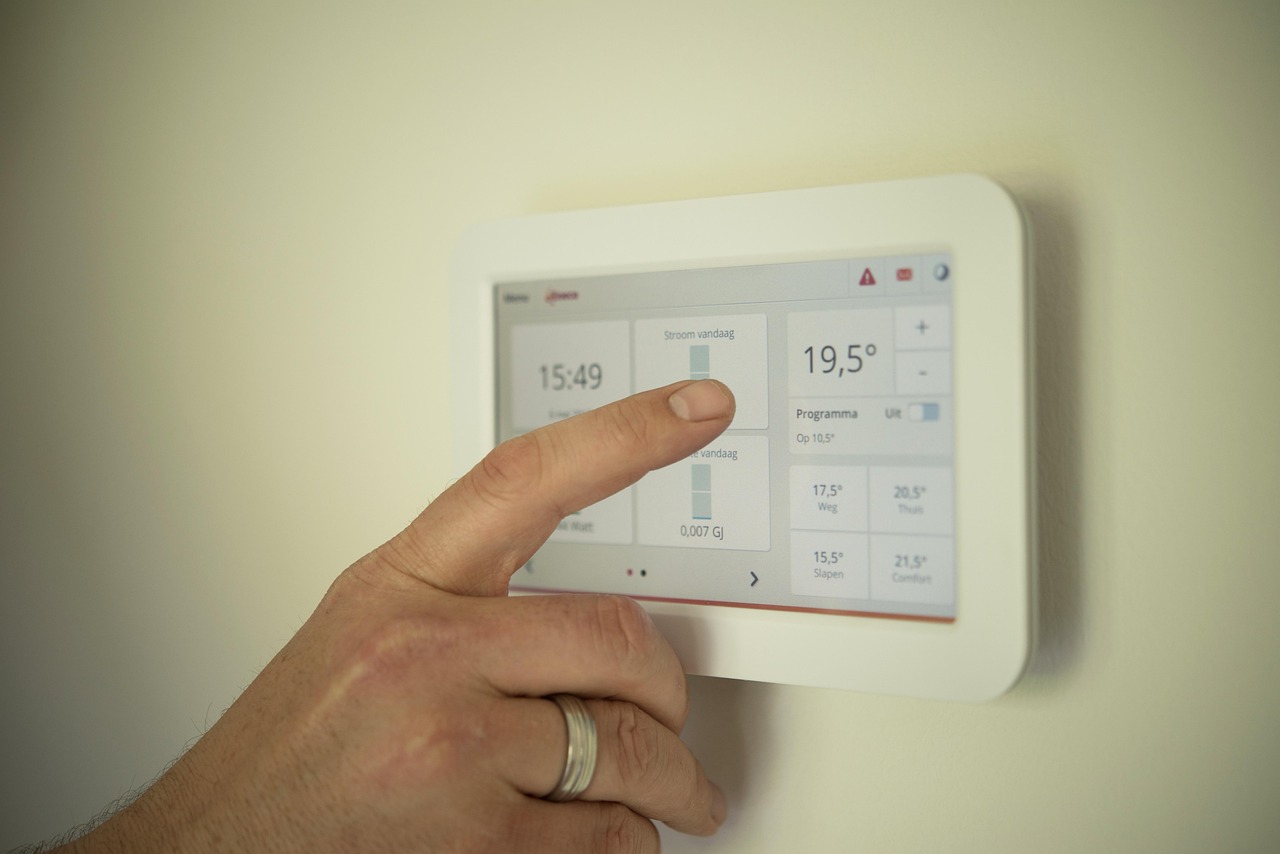
- Thermostat: setting it back 7°F to 10°F for 8 hours a day can save up to 10% a year on heating and cooling. If you have a heat pump, use a thermostat designed for heat pumps first.
- Air leaks: caulking, sealing and weatherstripping gaps can save 10% to 20% on heating and cooling.
- Water heater: set it to 120°F, and if the tank feels warm, an insulating blanket can save 7% to 16% a year on water heating.
Ask your utility about free or low-cost home energy checks and about budget billing, which spreads a year's costs into equal monthly payments. If a bill is past due, call before a shutoff notice arrives and ask about a payment plan.
Step 6: Get help with energy bills
LIHEAP
LIHEAP is a federally funded program that helps households with low incomes pay heating and cooling bills, handle energy crises, and pay for weatherization and minor energy-related repairs [10]. It can help prevent shutoffs and restore service that has been cut off [10]. Benefits are aimed at households whose energy bills take a large share of income, and at homes with older adults, people with disabilities or young children [10].
Each state sets its own income limit. Federal law caps it at 150% of the poverty guidelines or 60% of state median income, whichever is higher, and a state cannot set its limit below 110% of the poverty guidelines [11]. To apply, visit energyhelp.us or call the National Energy Assistance Referral line at 1-866-674-6327 [10].
Avoid LIHEAP scams. LIHEAP does not give grants directly to individuals and never charges a fee. A message offering a LIHEAP grant or asking for a fee should be reported to the HHS fraud hotline at 1-800-447-8477 [10].
Weatherization Assistance Program
The DOE's Weatherization Assistance Program makes homes of low-income households more energy efficient. It serves about 32,000 homes a year with DOE funds, and a national evaluation found those households save $372 or more a year on average [12].
Common traps to avoid
- Promotional rates that expire. Put the end date on your calendar [3].
- Bundles you do not use. A cheaper bundle is not a saving if half of it sits idle.
- Raising a deductible with no savings. Only do it if you could pay the deductible tomorrow [8].
- Paying anyone to "get" government aid. LIHEAP never charges a fee [10], so treat any request for payment to receive aid as a warning sign.
- Canceling insurance to save money. Dropping required coverage can cost far more after one accident.
When to get professional help
If you are behind on several bills, a nonprofit credit counselor can help you rank them and contact creditors. For insurance questions or complaints, your state insurance department can help.
Your next step
Open your last two months of statements today and list every recurring charge with its yearly cost. Then pick the three largest and make one call or one change for each this month.
Sources
- consumerfinance.gov https://www.consumerfinance.gov/archive/blog/budgeting-how-to-create-a-budget-and-stick-with-it/
- bls.gov https://www.bls.gov/news.release/cesan.nr0.htm
- consumer.ftc.gov https://consumer.ftc.gov/articles/getting-and-out-free-trials-auto-renewals-and-negative-option-subscriptions
- fcc.gov https://www.fcc.gov/broadbandlabels
- lifelinesupport.org https://www.lifelinesupport.org/
- lifelinesupport.org https://www.lifelinesupport.org/do-i-qualify/
- newsroom.aaa.com https://newsroom.aaa.com/wp-content/uploads/2026/09/AAA_YDC-Fact-Sheet_2026.pdf
- iii.org https://www.iii.org/article/nine-ways-to-lower-your-auto-insurance-costs
- energy.gov https://www.energy.gov/sites/default/files/2022-08/energy-saver-guide-2022.pdf
- acf.hhs.gov https://www.acf.hhs.gov/ocs/programs/liheap
- liheapch.acf.gov https://liheapch.acf.gov/delivery/income_eligibility.htm
- energy.gov https://www.energy.gov/scep/wap/weatherization-assistance-program